
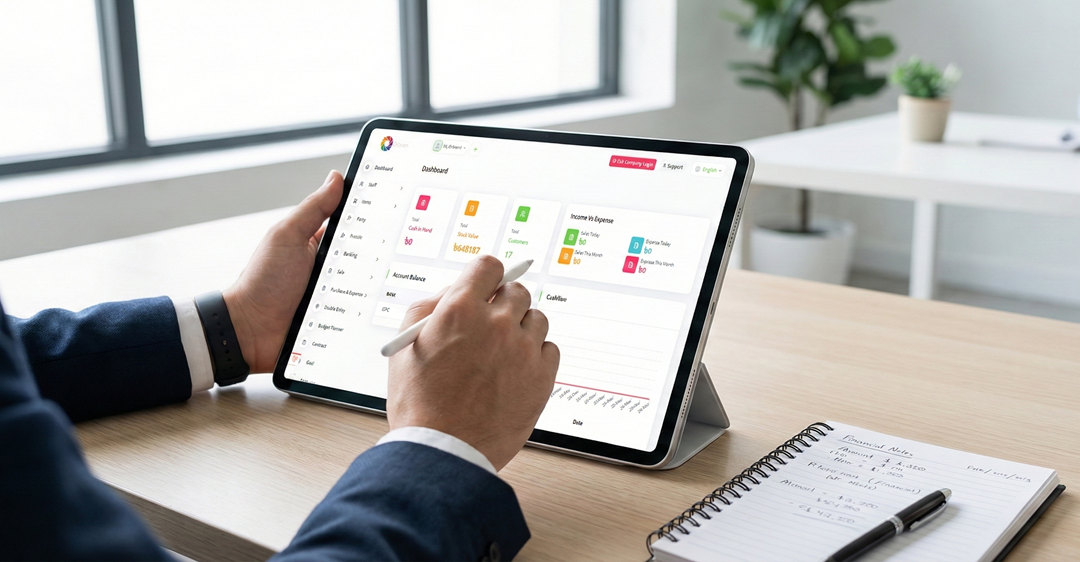
Cloud accounting is no longer optional for UAE businesses. It’s reshaping how finance teams work, how decisions are made, and how companies stay compliant in a fast‑evolving regulatory environment. This guide explains cloud accounting software UAE businesses are adopting, why it’s superior to traditional desktop systems, and how it supports organizations of all sizes.
1. What Is Cloud Accounting?
Cloud accounting software is an online financial system hosted on remote servers instead of on a local computer or company server. Users access the platform via the internet, using a web browser or dedicated mobile app. This means your books, invoices, tax records, and reports live online where authorized users can interact with them anytime, from anywhere [1].
Here’s how it works in simple terms:
- Hosted Online: All your financial data is stored and processed on secure servers managed by the software provider.
- Subscription Model: Most cloud accounting platforms charge a monthly or annual fee based on features or number of users.
- Automatic Updates: New features, security enhancements, and regulatory changes are pushed automatically without manual installation [1].
Compared to traditional desktop accounting—where software is installed on one or multiple local computers—cloud solutions modernize your financial operations for speed, flexibility, and collaboration [1].
2. Benefits of Cloud Accounting in UAE
Cloud accounting software offers strategic advantages for companies operating in the UAE’s dynamic marketplace. Here’s what UAE businesses gain from adopting cloud solutions:
Accessibility
Cloud accounting lets you manage books from anywhere, not just the office. All you need is an internet connection. This flexibility is especially useful for UAE companies that operate across multiple Emirates or have remote teams [2].
Example:
- CEO checking cash flow during travel
- Accountant working from home
- Teams in Dubai, Abu Dhabi, and Sharjah accessing the same dataset
Compliance with UAE Tax Laws
The UAE introduced Value Added Tax (VAT) in 2018, and compliance has become a legal requirement for many businesses. Cloud accounting platforms are designed to:
- Calculate VAT automatically
- Prepare VAT‑compliant invoices
- Generate reports ready for audit or submission to the Federal Tax Authority (FTA)
- Track corporate tax obligations as regulations evolve [2][3]
Keeping accurate financial records helps businesses avoid penalties and adhere to UAE tax reporting standards [3].
Real-Time Financial Visibility
Cloud platforms offer dashboards that update instantly. Instead of waiting days for reports, you get:
- Real‑time cash positions
- Live profit and loss statements
- Up‑to-date expense tracking
- Rolling performance metrics
This helps decision‑makers respond quickly to market changes or cash flow challenges [5].
Improved Collaboration Across Teams
With cloud accounting, finance teams, managers, and external auditors can work on the same data set simultaneously. This eliminates version conflicts and enhances accuracy [2].
Cost Savings and Scalability
Cloud solutions typically:
- Eliminate upfront software purchase costs
- Remove the need for costly local servers
- Scale as your business grows
Subscription pricing allows companies—from startups to enterprises—to pay only for what they use [6].
Security and Data Backup
Modern cloud providers invest heavily in information security, often exceeding what average businesses can afford. Standard protections include:
- End‑to‑end encryption
- Multi‑factor authentication
- Regular automatic backups
- Redundant data storage [2]

3. Cloud vs Desktop Accounting Software
Below is a practical comparison to help UAE businesses choose the right approach:
| Feature | Cloud Accounting Software | Desktop Accounting Software |
| Access | Anywhere with internet | Tied to one computer |
| Updates | Automatic by provider | Manual installation |
| Collaboration | Real‑time multi‑user | Single user at a time |
| Security | Enterprise‑grade encryption | User responsible |
| Scaling | Easily scalable | Limited by local setup |
| Cost Model | Subscription | Upfront license + maintenance [1] |
Cloud Advantages
- No hardware dependencies
- Better support for multi‑location teams
- Real-time numbers for faster decisions
- Lower operational IT costs [1]
Desktop Limitations
- Restricted access
- Version conflicts in multi‑user environments
- Manual backups increase risk
- Harder to maintain compliance without add‑ons [1]
In summary, cloud accounting becomes more valuable as businesses grow and operate more complex financial processes. Desktop systems may suit very small, single‑location firms with minimal technological needs, but they fall short on flexibility and scalability in today’s world [1].
4. Security & Data Privacy in UAE Cloud Accounting
Security and privacy are critical concerns for financial data. Cloud accounting providers address these with modern protections:
Encryption and Secure Storage
Financial data is encrypted both in transit and at rest, meaning it cannot be read without proper authorization [10].
Multi‑Factor Authentication
Requiring two steps to log in adds an extra layer of protection, reducing the risk of unauthorized access [2].
Regular Backups
Cloud systems automatically backup your data daily, reducing the risk of loss from hardware failure or theft [10].
UAE and International Standards
Many cloud providers comply with global security certifications like ISO 27001 and SOC 2, which ensures stringent data handling protocols [10].
Data Privacy Policies
Reputable providers explicitly define who can access data and under what conditions. This reduces the risk of misuse and ensures confidentiality [10].
Overall, cloud accounting security often surpasses traditional desktop accounting, where businesses are responsible for physical data protection and manual backups [9].
5. Cloud Accounting for SMEs vs Enterprises
Cloud accounting supports both small and large organisations, but the benefits vary by scale:
For SMEs
- Affordability: SMEs can start with basic plans and expand features as needed.
- Simplicity: Automated bookkeeping reduces reliance on specialist staff.
- Mobility: Owners and consultants can access books without being in the office [6].
Cloud solutions help small businesses streamline finance and focus on growth without heavy IT investment [6].
For Enterprises
- Integration: Large firms benefit from linking cloud accounting with ERP, CRM, and HR systems.
- Advanced Reporting: Enterprise features include forecasting, budgeting, and complex consolidations.
- Compliance: Built‑in tax updates and audit trails support regulatory reporting at scale [6].
Enterprises often leverage cloud accounting as part of a broader digital transformation strategy, adding analytics and automation layers that optimize performance [6].
6. Common Myths About Cloud Accounting
Many businesses hesitate to adopt cloud accounting because of misconceptions. Let’s tackle the most common ones [10]:
Myth 1: Cloud Is Not Secure
Truth: Cloud providers invest in security measures that most businesses can’t match on their own, including encryption and regular testing [10].
Myth 2: It’s Too Expensive
Truth: Subscription pricing spreads cost over time and removes the need for local servers and IT maintenance [10].
Myth 3: You Lose Control of Your Data
Truth: Cloud solutions offer robust permission controls. You decide who sees what and when [10].
Myth 4: Internet Reliance Is Risky
Truth: Modern businesses already depend on connectivity. Cloud platforms also work offline with sync features once reconnected [10].
7. FAQs
Q1: Is cloud accounting suitable for VAT compliance in UAE?
Yes. Cloud accounting software can prepare VAT‑compliant invoices, track liabilities, and generate FTA‑ready reports [2].
Q2: Can multiple users work simultaneously?
Yes. Cloud platforms allow real‑time collaboration across teams and locations [2].
Q3: What if internet is unavailable?
Most software offers limited offline functionality, syncing changes once the connection returns. Check your provider for specific details.
Q4: Are my financial records safe from cyberattack?
Reputable cloud providers use encryption, multi‑factor authentication, and frequent backups to protect your data [10].
Q5: Does cloud accounting replace accountants?
No. It automates routine tasks but accountants still provide analysis, planning, and compliance expertise.
Final Verdicts
Cloud accounting software UAE businesses adopt today is more than a modern convenience—it’s a strategic necessity. With real‑time access, automated compliance, robust security, and scalable pricing, cloud solutions empower organisations of all sizes to run leaner, more transparent, and more efficient financial operations. When compared to traditional desktop systems, the benefits are clear: cloud accounting drives better visibility, stronger compliance, and smarter decision‑making—making it the preferred choice for future‑ready finance teams.
References
- https://www.netsuite.com/portal/resource/articles/accounting/cloud-vs-desktop-accounting.shtml
- https://smartbooks.finance/Top-5-Benefits-of-Using-Cloud-Based-Accounting-Software-in-UAE/
- https://thearabianpost.com/cloud-accounting-software-in-the-uae-how-to-choose-and-why-your-business-needs-it/
- https://dgtx.ae/cloud-based-accounting-software/
- https://sscoglobal.com/what-are-the-benefits-of-cloud-accounting/
- https://rfzaccounting.ae/benefits-of-cloud-accounting-for-uae-businesses/
- https://www.reyson.ae/blog-detail/benefits-of-using-cloud-based-accounting-packages-in-dubai
- https://giddh.com/ae/cloud-accounting-software
- https://taxone.vyapar.com/post/web-based-accounting-myths-facts
- https://www.e-khata.com/blogs/data-security-in-cloud-based-accounting-myths-and-realities